Wednesday, July 26, 2017

Treasures of the Chocolate Hills

Is it true that the Maharlikans were not obsessed in constructing towering temples for purposes of rituals and ceremonies to please the Elohim because they believe the gods will not thrive in there? There are no archaeological evidences of ancient structures have been unearthed or discovered in the Philippines showing any of these activities. The only Maharlikan’s obsessions are gold, silver and other precious metals and stones (gems) and crystals.

Ophir (ancient Philippines) was undeniably a land rich of gold as it was discussed in my previous posts and even supported by some ancient writings or accounts and even the Bible itself. Ophir was even described with its mountains of gold, a richness and resources so abundant beyond imaginations. But where are these golds now? How could a mountain of gold vanish away without a trace except for some gold veins and motherlodes found in its mountains where mining activities are undertaking?

Traveling back to the time of the biblical King Solomon, it is said that his navy went to Ophir (Philippines) and from thence they fetched gold by the hundreds of talents; e.g. 420 talents (1 Kings 9:28) or 3000 talents (I Chronicles 29:4). That’s a huge volume of gold from Ophir.

In Hebrew weighing scale, one talent is equivalent to 34.2 kilos in the English metric scale. Putting that in the calculations, King Solomon could have:
                                420 talents x 34.2 kilos   = 14,364 kilos (14.3 MT)
                                3000 talents x 34.2 kilos = 102,600 kilos (102.6 MT)

But that huge volume do not even represents a mountain-size figure. There must be a more tangible proof to show that Ophir really has that resources of gold so abundant that they even called it mountains of gold. But where are these mountains of gold?

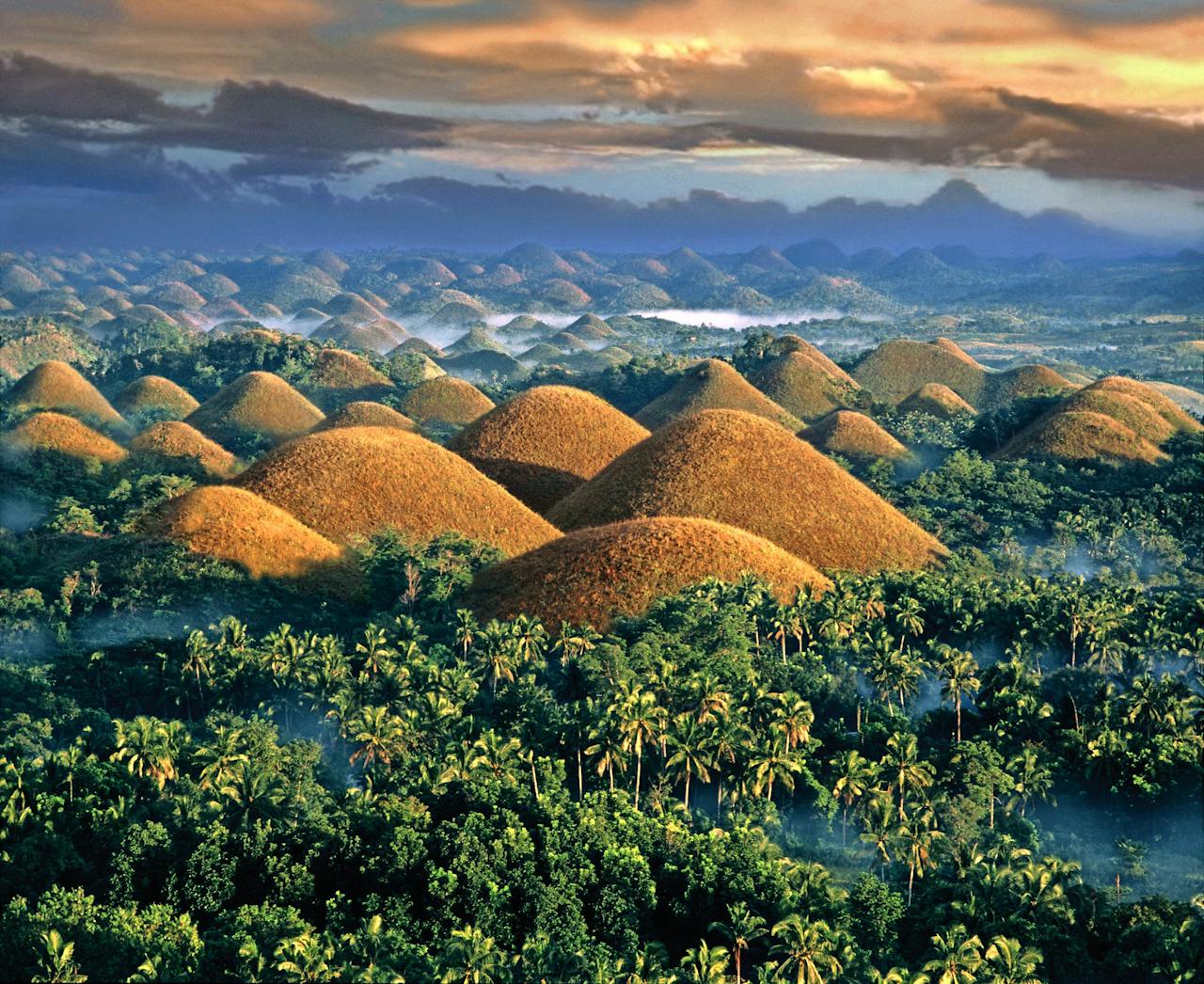
After watching the videos of King Solomon’s Gold Series posted by The God Culture in Youtube, more specifically the series about the Chocolate Hills in Bohol, Philippines, I have come to an idea, which is now for me, a theory, that there is more in the Chocolate Hills than merely an array of uniformly-coned mounds of the same heights. In that segment of the series the Group is theorizing or speculating that the chocolate hills in Bohol are actually pyramids covered with earth, like the one discovered in Mexico in 2010. That pyramid was totally hidden and for many years no one knows that mountain is actually a pyramid because it is completely covered by earth. This might had been covered most probably during the great flood in Noah’s time when the whole earth was covered with water.    

Image 2
Excavated Pyramid of Tonina Pyramid in Mexico


Look at the graphic image of the pyramid in Image 1 and look at the pyramid in Image 2. There is the big similarity from the graphic (imaginary) with the actual features after the structure was excavated.

I am now beginning to believe that the chocolate hills in Bohol Island are not just pyramids covered with earth as theorized by the The God Culture group but actually pyramids made of gold. And not just one but hundreds like houses built in clusters, like in Image 3. If this is true, then this will be the biggest and the most amazing finding not only in the history of Ophir but of the entire human history. But of course this has to be proven by scientific ways but for now the only way is to excavate these hills in order to find out what exactly underneath those pyramid-like mounds. 

So, my question is, are these not the golden wedge of Ophir mentioned in Isaiah 13:12?


Image 4
The Chocolate Hills, Philippines
Like this?

Image 5

Saturday, July 22, 2017

King Solomon's Gold Series: Part 2

Queen of Sheba Revisited. Sheba, Ophir, Tarshish, Philippines?


Thursday, July 20, 2017

King Solomon's Gold Series: Part 1

Where is the Land of Ophir? Is it the Philippines?


In this series we will find out:
1. That Ophir was a place of many islands far in the east rich of gold. 
2. That Ophir was the same as the land of Havilah, east of Eden, where its gold is good.
3. That King Solomon did send many voyages to the land of Ophir to obtain gold and almug tree for the construction of the House of the Lord (First Temple). 
4. That it takes three years journey to and from Ophir from the port of Eziongeber, south of Israel.
5. That Ophir was situated along with the land Sheba and Tarshish, all these places were named after the sons of Joktan, son of Eber where the Hebrew (Eber) name came from.
6. That the Philippines now is where the exact location of Ophir, Sheba and Tarshish together.
7. And that concludes that the Philippines is the land of Ophir, Sheba and Tarshish mentioned in the Bible.

Sunday, June 11, 2017

The Philippines To Be Truly Independent

I am not a supporter of this certain Magdalo Party-list Rep. Gary Alejano and I am in no way connected to or member to any of his political organizations. I just buy the same idea he has to rename the Philippines into one that will reflect its true identity free from any shadow of its colonizers and to be truly an independent country and a nation every Filipino can be proud off. For the name Philippines reflects a Spanish legacy of oppression, suppression and colonization through the tip of the sword of Spain under Felipe (Philip) the king, a reality we should put into oblivion.

It can be recalled that the late President Ferdinand E. Marcos had tried to rekindle the glorious past of the country when he introduced his own self-styled framework of revolution with his economic and political ideologies in his Ang Bagong Lipunan where he proposed to rename it into Maharlika. The same idea has now been the battle cry by those who truly believe that the Philippines can be great once again as it was before, and by renaming it into one that will truly reflects its glorious past really matters most.

Alejano wants Philippines renamed
Philippine Daily Inquirer, June 12, 2017, 12:44 PM

MANILA — How can the Philippines assert its independence? For Magdalo Party-list Rep. Gary Alejano, it helps to ditch the very name given by Spanish conquistadores.

Citing the need to be “truly independent,” Alejano has sought the creation of a proposed Geographic Renaming Commission to come up with a new name for the country within one year of its establishment.

Under House Bill No. 5867, the proposed commission will be tasked to submit its recommendations to the President by the end of its one-year life span.

The proposed commission will be composed of three commissioners from the National Commission for Culture and the Arts, the National Historical Commission of the Philippines, and the Komisyon ng Wikang Filipino.

A secretariat will be formed to provide technical support for the office. The proposed commission will also be authorized to create technical committees and engage the assistance of experts and professional advisors.

For the commission, Alejano sought an initial allocation of P30 million from the General Appropriations Act.

The bill explained that renaming the country is meant “to throw away the vestiges of colonialism, to establish our national identity, and to define how our nation, our people and our national language will be addressed internationally.”

“Ideally, the name of a country should define not only its land, but also its people and patrimony. In addition, the new name must also reflect our history, culture, society, and national sentiments,” Alejano explained in his bill.

The measure also noted that many nations formerly under colonial yoke have reverted to their precolonial names to gain a sense of national pride and identity.

Alejano noted that precolonial Philippines was divided into various kingdoms, rajahnates and sultanates, and the colonizers further “muddled our identity as a people and nation.”

During the expedition of Ruy Lopez de Villalobos in 1542, the country was named after the prince who would later become King Philip II of Spain. A common suggestion for the country’s new name would be Maharlika, popularized by dictator Ferdinand Marcos. SFM

Thursday, February 16, 2017

The Laguna Copperplate Inscriptions

This is the second of the series The Tagean-Tallano's Claim of Philippine Ownership.

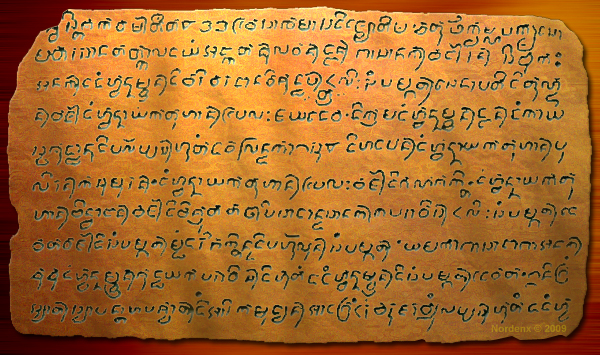
The discovery of the Laguna Copperplate Inscriptions (LCI) only proved of the existence of organized political system in the pre-Hispanic Philippine soil ruled by local kings or chieftains, and a writing system of their own which believed to have evolved from Kawi, an extinct Javanese script usually in Southeast Asia during the 600-1500 A.D. This discovery did reset the known Philippine history period from the common March 17, 1521-version to an earlier April 21, 900-period, the date when the Laguna Copperplate Inscription is believed to have been made.

Laguna Copperplate Inscription

In this topic I will take only on the details of the writings in the Laguna Copperplate Inscriptions, as herein below provided for the sake of information.

Tagalog Translation:
Mabuhay! Taóng Siyaka 822, buwán ng Waisaka, ayon sa aghámtalà. Ang ikaapat na araw ng pagliít ng buwán, Lunes. Sa pagkakátaóng itó, si Dayang Angkatán sampû ng kaniyáng kapatíd na nagngangalang Buka, na mga anák ng Kagalanggalang na si Namwarán, ay ginawaran ng isáng kasulatan ng lubós na kapatawarán mulâ sa Punong Pangkalahatan sa Tundún sa pagkatawán ng Punong Kagawad ng Pailáh na si Jayadewa.
Sa atas na itó, sa pamamagitan ng Tagasulat, ang Kagalanggalang na si Namwarán ay pinatawad na sa lahát at inalpasán sa kaniyáng utang at kaniyáng mga náhulíng kabayarán na 1 katî at 8 suwarna sa harapán ng Kagalanggalang na Punong Kagawad ng Puliran na si Ka Sumurán, sa kapangyarihan ng Kagalanggalang na Punong Kagawad ng Pailáh.
Dahil sa matapát na paglilingkód ni Namwarán bilang isáng sakop ng Punò, kinilala ng Kagalanggalang at batikáng Punong Kagawad ng Binwangan ang lahát ng nabubuhay pang kamaganak ni Namwarán na inangkín ng Punò ng Dewatà, na kinatawán ng Punò ng Medáng.
Samakatwíd, ang mga nabubuhay na inapó ng Kagalanggalang na si Namwarán ay pinatawad sa anumán at lahát ng utang ng Kagalanggalang na si Namwarán sa Punò ng Dewatà. Itó, kung sakalì, ay magpapahayag kaninumán na mulâ ngayón kung may taong magsasabing hindî pa alpás sa utang ang Kagalanggalang...
English Translation:
Long Live! Year of Siyaka 822, month of Waisaka, according to astronomy. The fourth day of the waning moon, Monday. On this occasion, Lady Angkatan, and her brother whose name is Buka, the children of the Honourable Namwaran, were awarded a document of complete pardon from the Commander in Chief of Tundun, represented by the Lord Minister of Pailah, Jayadewa.
By this order, through the scribe, the Honourable Namwaran has been forgiven of all and is released from his debts and arrears of 1 katî and 8 suwarna before the Honourable Lord Minister of Puliran, Ka Sumuran by the authority of the Lord Minister of Pailah.
Because of his faithful service as a subject of the Chief, the Honourable and widely renowned Lord Minister of Binwangan recognized all the living relatives of Namwaran who were claimed by the Chief of Dewata, represented by the Chief of Medang.
Yes, therefore the living descendants of the Honourable Namwaran are forgiven, indeed, of any and all debts of the Honourable Namwaran to the Chief of Dewata.
This, in any case, shall declare to whomever henceforth that on some future day should there be a man who claims that no release from the debt of the Honourable...
Notice below are some remarkable elements in the aforementioned inscription:
1. The use of calendar based on their knowledge of astronomy.
2. The use of document as legal instrument in granting pardon.
3. The existence of legal or justice system.
4. The presence of social classes and geo-political jurisdictions.
5. The use of monetary unit (used in trade and commerce).
6. Their knowledge in mathematics, arts and metallurgy.
7. The use of writing system.

The existence of Laguna Copperplate Inscriptions reveals that the early inhabitants of pre-Hispanic Philippines were civilized people. They are structured in their own social and political terms through organized polities at different levels. They adhered into the guiding principles of legal standards, such as obligations, agreements or contracts, as shown in the issuance of the declaration inscribed in the LCI.

However, in view of the aforementioned claim of the Tagean-Tallano's clan nowhere in the inscriptions it did mention any reference to the name of certain King Luisong Tagean, the purported patriarchal king of the Maharlikan Kingdom or to any of his immediate family members establishing their leaderships or ownership of the entire Philippines Islands or their ascendancy to royalty at that certain years in the Philippine history.

The Tagean-Tallano's Claim of Philippine Ownership

I am into the opinion that the aforementioned information is deceptive.

From this entry will be a series of expositions in an attempt to present contrasting evidences to refute the claim that the Philippines is owned by a single family, the Tagean-Tallanos. In the end we will find out the truth, and the truth shall set us free.

When I first heard of the information a feeling of doubt immediately coagulated in my mind suspecting the veracity of the claim. To my sound mind, this information, though seems plausible is totally incredible although we have no direct existing proof yet, such as well-founded historical documents to deflate such claim. So, I confidently consulted the internet to find out how this information had already spread clandestinely into worldwide web, and in like manner to find out how to attack the information from its weekest point.

Claims are often cited in corroboration to historical thesis that a paper or a document issued or obtained from daily ordinary operations of business is a valid source of historical facts. This argument seems to be true if it pertains to the existence of the paper itself in question, regardless it being issued or obtained, or the stipulated date and the purpose it was made for. But the legality and validity will be the subject of arguments if the said paper or document was made, issued or obtained under the guise of deceit and fraud. This method even nowadays is somehow becoming a shared practice as a means to take advantage at the expense of others. In the court’s gamut it is termed “falsification” of document which is simply illegal or against the founded principles of human laws. This renders the paper in question null and void and without legal standing if proven otherwise.

An example of great impact are those land ownerships over ancestral domains obtained by a second party without in anyway have the legal, ancestral or genealogical rights over the contested lands and acquired by way of other means such as falsification of documents, threat or intimidation. Citing many court cases are sufficient to prove their existence.

The Calamba Villagers vs. Yulo Family Case: The native people arrived between 1912 and 1916, and settled at Calamba village in Laguna. They tilled the land and mostly made a living from farming. The Yulo family arrived later in 1948. This family claimed ownership of about 22,249 hectares of land which they reportedly bought from Vicent Madirgal, a wealthy family. They displaced and evicted the native Filipinos from the land. The Yulo family, however, could not present official documentation to prove their ownership, but instead relied on their close relations with government officials who reconstituted the land title to self-justify their occupancy of the land. Native farmers were left landless and confronted with difficult living conditions, including being constantly threatened whenever they tried to organize and protect their properties.

Agana Decision with Compromise Agreement of 1972: The following below is an excerpt from the said court decision penned by the late Honorable CFI Judge Enrique A. Agana, Branch 28, CFI, Pasay City dated February 4, 1972:
“This Court has observed the blueprint pattern of clandestine land grabbing by the allege-claiming to be land owners which were derived from the National Government thru its instrumental agencies, the Bureau of Lands and Forestry, the Land Registration Commission in conspiracy of the officials of Building Permit Bureau of the Department of Public Work and Highway and by the local government officials and with participation of some Register of Deeds in the City and Provinces where the lands are situated. These are where the sacred role of the government must have to be exercised for the protection of the constitutional rights of its citizenry. Yet, very clearly, that land grabbing scheme massively laundered icing by socialized housing programs, urban and agricultural land reform of the government in connivance with the developers, sometimes in the pretext of National Government infrastructure program is a silent confiscation of real properties of the private…”
But worst of these is our so-called mainstream history propagated by those minds who are, in one way or another, have successfully doctored the historical facts and records portraying the true history of the Filipino nation, or the works of the conspiracy theorists in their grand efforts to twist some facts for yet unknown reasons. Our school textbooks are the clear tangible proofs. A good case is the claimed Ferdinand Magellan’s [re]discovery of the Philippine Archipelago in March 17, 1521. Magellan’s arrival and the naming of this group of islands into La Islas Filipinas marked the genesis of the European version of the Philippine History which became, in the statutory language, legal and binding. It was also the rallying point for the Filipinos in their search for national identity with distinction and pride. But the Philippines as an archipelago with its geographically, commercially and politically civilized balangay-states called “rajahnates” or “kingdoms” was already flourishing and had been here even hundreds of years before Magellan set foot on to its shores.

Wednesday, February 15, 2017

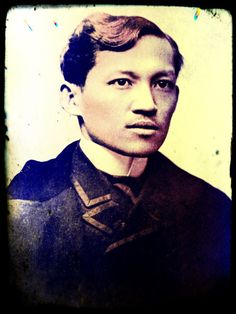
Yes, Rizal is a Maharlikan

Rizal, A Maharlikan
In the previous article, Jose Rizal, A Maharlikan? the name Jose Rizal was dissected from its etymological origin to reveal its esoteric meaning for the sake of obtaining a deeper purview of the hidden personality of Rizal himself through his name which for some reasons steered debates why he choose Rizal instead of his family’s surname, Mercado. The result was astounding revealing that both Jose and Rizal are implying supernal attributes proving that by the name alone has something hidden beyond the extra-ordinary. Of course that is only half true for those who avowed their deeper inclinations to the arcane social, political and religious principles of the great hero. For them, Rizal’s two great masterpieces, Noli Me Tangere and El Filibusterismo are more than novels. These writings concealed an archaic spiritual battle between good and evil spawned into the very nerve of human society, incurable like a social cancer.

So, and again, who is Dr. Jose Rizal? Is he a Maharlikan? Through his writings, Rizal often claimed of being one citizen of a “Malayan” blood. A Malay blood (race) pertains to the racial identification in general of all groups of people or nations originated or thriving in the Malay region. Citing from Wikipedia source, the Malays are an ethnic group of Austronesian peoples predominantly inhabiting the Malay Peninsula, eastern Sumatra and coastal Borneo, as well as the smaller islands which lie between these locations — areas that are collectively known as the Malay world. Is the description of the locations sound familiar? Remarkably, most Lemurian enthusiasts would agree that it is the same location where the lost world of Lemuria once located. The same locations is also designated through this blog where the first Maharlikans thrived, and that’s the rallying point taken seriously into consideration.

Notice also the similarities of Jose Rizal with Gautama Buddha and Jesus Christ, both did inspire for the foundations of Buddhism and Christianism, respectively. Buddha’s teachings of “ahimsa” traced its roots from the Maharlikan’s wisdom of “respect for all forms of life”, which is also reflected in Jesus’ “love thy fellowmen” teaching. Rizal was in straight opposition to arms struggle or bloody rebellion as proposed by the “plebeians” in their struggle for independence. His view of social reform through the might of the pen or through peaceful means reflects those of the Maharlikan thinking. Despite of his opposition, for the virtuous men, Rizal was more than a warrior, he was a true freedom fighter without necessarily committing himself into the battle field and directly confront the enemies for he believed that pen is mightier than sword. Rizal is the epitome of a truly intellectual reformer.

Tuesday, February 7, 2017

Rajahnate of Butuan, Richer Than Srivijaya

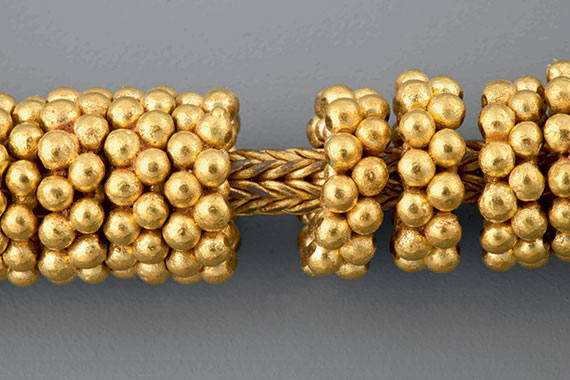
Detail of a neck ornament. Ayala Museum, 81.5171.
Photography by Neal Oshima; Image courtesy of Ayala Museum

This is what made the Srivijayan-Majapahit Empire the richest empire during those times:

"It was no surprise why the Majapahit Empire was the richest kingdom in the world when it had controlled the Maharlikan archipelago. The same reason is also attributed to the legendary King Solomon’s temple made of gold that were mined from the land of Ophir." (The Maharlikans: Fact #8)
The polity known as Butuan in the southern Philippines rose to commercial prominence in the tenth century, but ultimately declined in the thirteenth century for unknown reasons. The cultural area associated with this land transcended the political boundaries of the present-day Philippine provinces of Agusan del Norte, Agusan del Sur, and Surigao del Sur.

Early Chinese sources offer clues to the power of Butuan at its peak. The Song Shi (History of the Song) documents that the Butuan king Ch’i-ling, or Kiling, sent emissaries to the Chinese imperial court in 1003 and 1007 and other texts make note of trade between China and Butuan. The astonishing quantities and impressive quality of gold treasures recovered in Butuan suggest that its flourishing port settlement played an until recently little-recognized role in early Southeast Asian trade. Surprisingly, the amount of gold discovered in Butuan far exceeds that found in Sumatra, where the much better known flourishing kingdom of Srivijaya is said to have been located.

Highlighted in this section of the exhibition are selections from a spectacular hoard of gold necklaces, chains, waistbands, bangles, ritual bowls, implements, and ceremonial weapons that was accidentally discovered in 1981 in the hamlet of Magroyong near Butuan. Objects from this cache, known as the Surigao Treasure, are among the most intriguing in the collection of early Philippine gold objects assembled from the 1960s to 1981 by archaeologist-collector Cecilia Y. Locsin (1930–2013) and her husband Leandro V. Locsin (1928–1994) that are now part of the collections of the Ayala Museum.

The personal adornments recovered from Butuan appear to be primarily elite regalia. These splendid adornments and ritual objects were probably part of a ruling family’s bahandi, or collective heirloom wealth. The identity and fate of the royal family who presumably owned the treasures are unknown. Future excavations in Butuan may provide us with more information about everyday life in the ancient society that produced these technically astounding works.

Source: The Kingdom of Butuan

Monday, February 6, 2017

Maharlika, A Sacred Language

The Bible tells us about the story of the Tower of Babel, when mankind spoke of only one universal language. Then Gods (Elohim) said, “let us go down, and there confound their language, that they may not understand one another's speech. So the Gods scattered them abroad from thence upon the face of all the earth: and they left off to build the city.” (Gen. 11:7-8).

What must be the original language of mankind confounded by the Gods? 

There is an old wisdom which tells that the words or language of God Elohim is as powerful as His hidden name, and mankind is in no way has the natural strength to endure His presence and power. This was proven true by the presence of a thick veil in the Solomon’s Temple which served as barrier between God and man, as God’s “eyes are too pure to look on evil” (Hab. 1:13), and He can tolerate no sin. It is also said that the entire book called Torah contains the complete names of God and is broken down into pieces so that mankind can understand it. Only the angels know of His words and language.

By applying this old wisdom it is understood from the very beginning that the Muians (heavenly beings) spoke their original language spoken in the heavens which is, in the esoteric, this language is called the divine language of the Gods (and the angels). The Muians introduced this language to the first humans, the Maharlikans. However, being in the lower dimension and of slower mental vibratory frequency, this language cannot be understood by the Maharlikans, it has to be unabridged. From this language came the Adamic, Aramaic, Archaic, Latin and Sanskrit language, among others. The descendants of Adam and Eve (Maharlikans) used the Adamic (Edenic), the Christ the Aramaic, the Europeans the Latin, and the Hindus the Sanskrit. These languages have in part hidden in some of its selected words the sacred characteristics of those languages used during the ancient times depicting the sacredness of their true origin. For example, in Sanskrit the word AUM or OM (from Mu or Um) is used to designate the holy name of God. The Egyptians used AMN (sounds like AUM) being the name of the “hidden god”. The Christ is also called the AMEN (Rev. 3:14). Christians end their prayers with "Amen". Be it the AUM, OM, UM, AMN or AMEN, these words stand for one and the same being, the name of the "unconcealed" or "hidden" sacred name of God.

Now, this confirms as claimed through etymological orientation that the word or term "Maharlika", of Sanskrit origin, is in itself carries a sacred orientation. It was wholly taken from the word "Maharloka" by changing only the letter "o" into "i", which practice of substitution can only be explained in the esoteric wisdom of the Kabbalah. That is, Maharloka in Sanskrit means great plain (heaven of the Gods) while Maharlika means great creations (children of the Gods).

Monday, January 30, 2017

Fact #9: The Maharlikans Have No Social Classes or Titles

9. Titles like rajah, datu or lakan were of Hindu-Malayan origins. Maharlikan people have no titles except being “maharlikans” which means men of renown, great men or men from the great plane.

Recent archaeological findings suggests that the history of the Philippines could have begun as early as 67,000 years ago with the discovery of Callao Man and believed to have reached the Islands using primitive rafts or boats. Callao Man predated the arrival of the Negritos 37,000 years earlier. Indonesians arrived more or less between 6,000 to 5,000 years ago.

These groups then stratified into: hunter-gatherer tribes, warrior societies, petty plutocracies and maritime-oriented harbor principalities which eventually grew into kingdoms, rajahnates, principalities, confederations and sultanates. States such as the Indianized Rajahnate of Butuan and Cebu, the dynasty of Tondo, the august kingdoms of Maysapan and Maynila, the Confederation of Madyaas, the sinified Country of Mai, as well as the Muslim Sultanates of Sulu and Maguindanao. These small maritime states flourished from as early as the 1st Millenium. These kingdoms traded with what are now now called China, India, Japan, Thailand, Vietnam, and Indonesia.[1]

Titles such as datu, raha, lakan or sultan in the early Pre-Spanish Philippines were of colonial influences and origins introduced during the spread of Hinduism, Buddhism and Islam. The pure Muian Maharlikans have no social classes, statuses or titles as they were created equally in reference to their original purpose and nature. They simply called themselves the maharlikans meaning men of renown, great men, or men from the great plane, a name which exemplifies their sublime and pure origin, their level of consciousness, and their purpose in accordance with the divine plan of creation. In Tagalog terminology, in the Philippine history, maharlika became commonly referred to as “freemen” (malaya) or sometimes called the “noblemen” (maginoo). The first term implies an acquired status free from being a slave or a subject of a master while the second one implies nobility, high regard or respectable status in the society. However, these definitions of terms are misnomers.

The following descriptions should further clarify these terms:
·              Datu - The word Datu is a cognate of the Malay terms Dato' or Datuk, which is one of many noble titles in Malaysia, and to the Fijian chiefly title of Ratu.
·              Raha - Raha; also spelled Raja or Rajah (from Sanskrit Rājan), is a title for a monarch or princely ruler in South and Southeast Asia. The female form Rani (sometimes spelled ranee) applies equally to the wife of a Raja (or of an equivalent style such as Rana), usually as queen consort and occasionally as regent.
·              Lakan - Lakan originally referred to a rank in the pre-Hispanic Filipino nobility in the island of Luzon, which means "paramount ruler." It has been suggested that this rank is equivalent to that of Raha, and that different ethnic groups either used one term or the other, or used the two words interchangeably.
·              Sri - Sri, also transliterated as Sree, Shri, Shree, Si or Seri is a word of Sanskrit origin, used in the Indian subcontinent as a polite form of address equivalent to the English "Mr." or "Ms."
·              SultanSultan is a title of the ruler of a Muslim country, especially of the former Ottoman Empire.
·              DayangDayang or Dayang Dayang means "princes", and is a title given only to the daughters of the Sultan.

So far, the oldest known written record in the Philippine history discovered in the Philippine soil is the Laguna Copperplate Inscription dating back in the year 822 AD, written in the Indonesian script called Kavi. Navigators, sailors and traders of the Srivijayan Empire started their influences by 9th until 12th century. The Chinese had established a commercial contact with the Pre-Hispanic Filipinos as early as the year 982. By 14th century, Islam started to spread in the Philippines. Majapahit Empire replaced Srivijayan Empire until the early 15th century and occupied a Maharlikan territory thereafter.

With that being said, from the pre-colonial times until 822 AD, there were no surviving records have been found to consult what exactly happened during those missing years. Henceforth, the claim by many that the Muslims were the first to populate the Philippine archipelago is a lie, a baseless claim that should not be entertained at all levels. That statement is a blatant disrespect to the first inhabitants in the Philippines propagated by those Muslims who are trying to give credit to their religion or to their unfounded claim that they belong to the bloodlines of the sultan and the entire archipelago belongs to them.

Source:
[1] History of Philippines

Saturday, January 28, 2017

Fact #8: The Srivijayan & Majapahit Empires Were Only Custodians of the Ophir's Gold

8. The nation's treasury of the Maharlikan people were so abundant that when under the Srivijayan-Majapahit Empire these were accumulated and taken as part of the empires’ treasury being the custodians of the wealth meant (only) for the Maharlikan nation.

In the previous topics, three facts were established: 1) the location of the land called Ophir (of the Maharlikan people) where King Solomon obtained gold points to no other place than the present-day Philippine Archipelago; 2) gold was so abundant in the land of Ophir during those days, and; 3) the Maharlikan people in the land of Ophir were in trade relations with other kingdoms and nations.

Prior to the Moslem's invasions of the Malayan Peninsula, in the 15th century, the Majapahit Empire had already commercially controlled most part of the Maharlikan archipelago due to the latter’s having no central governance to unify the nation and no central forces to resist the impending occupation. It was an easy integration process on the part of the empire as there was no opposition at all. That condition of no central rulership had convinced them that the Maharlikan archipelago is a territory belonging to the Majapahit.

But owing to the unceasing incursions of the Moslems in the Malaya Peninsula between 1470's to 1520's establishing their sultanate governance and the Sharia Law in the region, the Majapahit Empire slowly disintegrated forcing its remaining central government to gradually moved from Java to Bali (Indonesia). And from there, a large number of courtiers, artisans, priests, and members of the royal family together with the huge amount of their treasury finally transferred to the Maharlikan archipelago in Kota Kinabalu, Sabah (North Borneo).

There, in the Maharlikan archipelago the reigning royal family remained undisturbed for two centuries. With that reason, among others, as the reigning family continues, the treasures and natural resources were mined and accumulated into their treasury for the sustenance of the newly established kingdom. Gold was so abundant in the land that by shifting alone on the riverbeds anyone can find a gold nugget even as big as egg or walnut. Citing from the article Gold of Ancestors: Ayala Museum's Greatest Treasures written by Emmie V. Abadilla in 2014, she said, "Masters and slaves wore gold in their daily lives. Even the lowest of the low slaves wore gold ornaments. The country overflowed with gold in those days." It was no surprise why the Majapahit Empire was the richest kingdom in the world when it had controlled the Maharlikan archipelago. The same reason is also attributed to the legendary King Solomon’s temple made of gold that were mined from the land of Ophir.

Thursday, January 26, 2017

Fact #7: The Hindu-Buddhist Kingdoms of Srivijaya & Majapahit Were Aware of the Ophir's Gold

7. From the Prehistoric Indonesia to the Salakanagara Kingdom through the Srivijayan to Majapahit Kingdom they were aware of the golden age in the history of the Maharlikan people. They themselves inclined to believe they were also descendants of the Maharlikans so they adopted almost everything pertaining the Maharlikan civilization.

Prior to the advent of civilizations and kingdoms in the Indonesian Region and the Malay Peninsula, and prior to the integration of this Pre-Spanish Maharlikan (Ophir) territory to the Srivijayan Empire, this land and its people were already known to the westerners and nearby territories: to the Phoenicians, the Greeks, the Romans, the Arabs and the Hebrews by the names they gave on it. It was not clear however how the name Ophir came to the limelight. But the first mentioned of Ophir was in Genesis 10, as one of the 13 sons of Joktan, the son of Eber. Another mention of the name  Ophir was at the time of King Solomon where according to the book of Kings was a land afar in the east where the "wise king" imported golds and almug (algum) woods by the ships for the completion of the Solomon's Temple.

The true location of Ophir was documented in a book found in Spain entitled "Collecion General de Documentos Relativos a las Islas Filipinas". Document No. 98 of the said book dated 1519-1522 described in details how the land of Ophir can be found:

"Ophir can be found by travelling from the Cape of Good Hope in Africa, to India, to Burma, to Sumatra, to Moluccas, to Borneo, to Sulu, to China, then finally to Ophir." Ophir was said to be "[...] in front of China towards the sea, of many islands where the Moluccans, Chinese, and Lequios met to trade..."
Jes Tirol asserts that this group of islands could not be Japan because the Moluccans did not get there, nor Taiwan, since it is not composed of "many islands." Only the present-day Philippines, he says, could fit the description. Spanish records also mention the Lequious (big, bearded white men, probably descendants of the Phoenicians, whose ships were always laden with gold and silver) in the islands to gather gold and silver. Other evidence has also been pointed out suggesting that the Philippines was the biblical Ophir.

This factual information about Ophir (Maharlika) and its abundance of gold surely did cause interest not only to the westerners but also to the neighboring kingdoms, such that of Indonesia and Sumatra. That being said, this Maharlikan territory was assimilated, by all means, to the thalassocratic city-state of Srivijaya, a Hindu-Buddhist kingdom, with the belief and admiration that Ophir was a place and a civilization from where there forebears came.

By the 15th century, the Maharajahs of the Majapahit Empire transplanted to the Kingdom of Maharlika.[1]

Sunday, January 1, 2017

Fact #6: From Srivijayan to Majapahit, They Were Silent Assimilators of the Land of Ophir

6. The Srivijayan Empire was the later silent assimilator of this land of Ophir bringing with them their Hindu-Malayan culture. This leads to the gradual banishment of the remnants of the Maharlikan people (Ylayas) and their culture as they gradually were assimilated into the Hindu-Malayan culture. Those who maintained the Muian ways found the comfort of nature in the hinterlands. The indigenous people (in the Philippines) are now their living descendants.

Noted here that the Srivijayan Empire flourished more or less between 8th to 12th century CE (Common Era). Although it is not clear but most probably the root of the Srivijayan Empire might have started to flourish and gain notoriety as early as the 5th century around present-day Palembang, Sumatra. The land of Ophir on the other hand was a biblical name of that isles afar off mentioned in the Bible dating back to the time of King Solomon of Israel around 970 BC - 931 BC. Ophir was undisputedly rich of gold where the king of Israel obtained by the ships. Most of those who tried to locate the physical Ophir did find their ways all the way to the present day Philippine Archipelago. It has to be underlined therein that the biblical land of Ophir is the present day Philippine Islands rich of gold the Srivijayan Empire was so obsessed to have gained control of including its wealth and treasure.

Once again, bear in mind for a while that prior to the advent of the Hindu-Malayan culture of the Srivijayan-Majapahit Empire, the Ylayan civilization did flourish peacefully and abundantly in terms of mercantile with foreign traders, serene annual atmospheric condition, blissful health, great wealth, bountiful harvest and prosperity in their life in general. It was at this period when great volumes of gold and almaciga or almug (algum) tree (Scientific Name: Igathis philippinensis) were shipped out for the construction of King Solomon's temple. In short, it was their "golden age" as regarded by the forthcoming empire.

Moreover, the mere fact that I used the word "assimilator" in the heading is because there was no resistance from them as they have welcomed the new merchant-occupants (Srivijayan Empire) with open arms in the name of mutual respect and co-existence. Nevertheless, due to their contrasting cultural orientations, the atmosphere and the deep feeling of ethnocentrism forced the Ylayas to find comfort in the mountains and forests.

It might be unfair at this moment to purport that some of the indigenous people in the Philippines, who were fearsome warriors and practiced head-hunting, like the Kalingas of the Kalinga Province, did not evolve from the Ylayan blood but from the Srivijayan culture. This assessment finds reference to the existence of Kalinga Kingdom in ancient east India approximately 265 BCE. The region was scene of the bloody Kalinga War fought by Ashoka of the Maurya Empire.

Sunday, December 25, 2016

Fact #5: The Kalantiaw Code Was a Later Version of an Oral Law Observed in the Land of Ophir

5. The Kalantiaw Code (be it a hoax or not) was a later version of a much older code observed during the times of Ophir.

Rajah Bendahara Kalantiaw popularly known as Datu Kalantiaw is a mythical Filipino character purported to have ruled the island Panay and gave its first written law known as the Kalantiaw Code on 1433. It is irrelevant at this moment to discuss whether the Code was a hoax or not. But prior to the emergence of such law, during the Ylaya’s time, in the land of Ophir, there was a much older version of oral laws prevailing drawn from the Muian civilization. The alleged Kalantiaw Code is most probably an attempt to codify such oral traditions for penalization and recording purposes.

It has to be emphasized here that those oral laws originally observed were meant only as sets of principles and guidelines for the perpetuation of moral standards and social orders. They have no central government who enforced those rules but governed by a group of elders who set up those principles and guidelines.  Like in the time of Moses in Mt. Sinai, the Ten Commandments were given to his people to follow and for them not to deviate away from the norms, practices, values and traditions the Jewish way in accordance to the will of their God Elohim. Notice that there was no mention of “penalty” in the Ten Commandments but purely instructions.

The codification of such laws, meaning their inscriptions or the act of putting them into writings is a mode or an attempt to interpret them and to systematize their implementations, to put them as set of legal standards with their prescribed penalty or punishment imposed if not observed accordingly. This is true to the Kalantiaw Code where each specific article or provision of the law has its appropriate penalty strictly imposed. The same is true to the Ten Commandments which later on were interpreted and expounded to become the Torah or commonly known as the Law of Moses.

Wednesday, December 21, 2016

Fact #4: The Filipino Race Descended from the Maharlikans Through the Ylayas

4. The later descendants of the Maharlikan race were those "Ylayas" (Isidro Escare Abeto, 1989) in a land called Ophir, from whom King Solomon obtained ships of gold. During that period the Ylayas have already well established their communities after the cataclysmic event that destroyed the Muian civilization.

The next 10,000 years, during and after the last ice age was a survival period for the Maharlikans in view of the last great upheaval they have undergone through, which was followed thereafter by the decrease of the Earth's temperature freezing most part of the hinterlands forcing them to thrive in the caves. It was during that period when waves of succeeding migrants begun to populate the land of Ophir.

It is interesting to acknowledge here the work of a world renowned American anthropologist in the person of Henry Otley Beyer, founder of the Anthropology Department of the University of the Philippines. Beyer proposed in his Migration Wave Theory that the peopling of the archipelago was a result of migrations in different time periods. The first group Beyer called the “Dawn Man” or cave men type of who, according to his theory, arrived around 250,000 years ago. Beyer was actually referring to the “escaped remnants” of Muian descendants (Maharlikans) who survived the last great upheaval and found refuge in the archipelago. They did not arrive as a result of unintentional wandering in search for food, as Beyer proposed, but rather already been here and aware of its existence as they used to visit the place during the Muian times. This fact supports the Core Population Theory of Felipe Landa Jocano, another known anthropologist of the University of the Philippines who refuted Beyer’s migration theory. Jocano instead did propose that the first people of Southeast Asia (including the Philippines) were products of a long process of evolution and migration. His research indicates that they shared more or less the same culture, beliefs, practices and even similar tools and implements.

The second wave of migrants in Beyer's theory were the so-called “Negritos” who, according to Beyer, came around or between 25,000 to 30,000 years ago. These group fused in their communities and culture with the already established Maharlikan settlements, socialized and intermarried with the Maharlikan people. These migrant people came from the neighboring islands in the south, from Indonesia and Malaysia through land bridges. From that point of origin being in the south, going to north (ilaya meaning "upper part" or "north") to the Maharlikan’s direction of location, the next migrating people (Third Wave A and B, between 6,000 to 500 years ago) did refer to them the ylayas, a term which became prevalent as being referred to the "people of the north".

It has to be noticed here that there was a reversed pattern of migrations, first, from the Maharlikan group going outside, and then from the outside coming to the Maharlikan territory. The explanation was that, these migrating people coming into the land of Maharlika (Ophir) were on the clandestine process of revisiting their true origin as told in their oral traditions. This was true to both the Indonesian's Srivijayan and Majapahit empires, respectively.

The advent and emergence of the Ylayan culture, which was an assimilation of the surviving Maharlikans and foreign migrants (second and third waves) paved way for the revival of the Muian ways through their system of governance, arts, belief, medicine, and in their knowledge of the supernatural. It has to be noted that the people of the Pre-European Philippines were mostly animist (who really did not worship the spirits of nature but rather honored them in a less elaborated rites) have records or books of mystical in nature. These knowledge or abilities traced back from the Muian period.

It should not also be confused that the term ilaya (ylaya) has no connection with the term Malaya, such that of the Malayan Peninsula or Malaysia, which refers to the land far south-west of the then land of Ophir.

Wednesday, July 6, 2016

Fact #3: The Maharlikans Were Not Fearsome Warriors

3. The Maharlikans were not warriors contrary to prevailing notions because during their times they have no enemies or in conflict with other races, except with nature's law of balance and restoration that destroyed the grandeur of their civilization.

The Maharlikans were peace-loving people contrary to prevailing claims that they were warriors. They knew of the Gods (Elohim) in the heavens (shamayim) who created them. Though they never conceived in the rational sense any form or pattern of a system of belief called religion, their ways of living conformed harmoniously with laws of the Gods and of nature, to the principles and virtue of love, for which, its solemn practice begets mutual respect, loving-kindness, compassion, and the respect for life. Every member of the community had earned the respect as they have conferred the same respect due to others. The connection was so strong that Jainism's teaching of ahimsa or non-injury to anyone has its linking from the Maharlikan's concept of respect for all forms of life. This was slightly modified in Buddha's teaching of the "law of cause and effect" or karma thus popularized the proverb, "Hurt not others in ways that you yourself would find hurtful".

Moreover, the concept of Maharlikan warrior was a colonial mentality of Srivijayan or Majapahit Empire influence who brought to them those warlike attitudes. The Indonesians were the real warriors of excelled marksmanship thirsty of the enemy's blood. The pure Maharlikans on the other side were neither oppressive nor defensive. Taking arms or engaging one's self in conflict with other people, such as in war or arms struggle, justifying killing, is for them a taboo condemned at all levels. That Maharlikan warrior thinking is contrary to the law of co-existence.

Thursday, June 30, 2016

The Land of Mu Identified?

Quoting from the previous post, The Last Great Upheaval:

“Then came the last great upheaval. The Earth’s ring of fire consumed most portions of the eastern hemisphere including their great city leaving it hidden miles beneath the ocean floor. Those who survived were dispersed out in all directions. The portals were closed and the Great City of Mu had gone until this days, awaiting for the proper time to resurface for the greatest revival of mankind.”
Although the theory of a submerged continent purportedly called Mu in the Pacific did not gain strong backing and reference from the scientific community, the recent conclusion as a result of a long continuous geological research and study by a group of scientists led to no other theory that indeed somewhere in the Pacific region lies a submerged continent which now called Zealandia by the Geological Society of America. The announcement somehow had shifted the old mythical theory to another yet scientific name that might be referring to the same continent of Mu.

Zealandia
This is not a sudden discovery but a gradual realization; as recently as 10 years ago we would not have had the accumulated data or confidence in interpretation to write this paper. Since it was first proposed by Luyendyk (1995), the use of the name Zealandia for a southwest Pacific continent has had moderate uptake (e.g., Mortimer et al., 2006; Grobys et al., 2008; Segev et al., 2012; Mortimer and Campbell, 2014; Graham, 2015). However, it is still not well known to the broad international science community. A correct accounting of Earth’s continents is important for multiple fields of natural science; the purpose of this paper is to formally put forth the scientific case for the continent of Zealandia (Figs. 1 and 2) and explain why its identification is important.” (Zealandia: Earth’s Hidden Continent)

Mu, the Motherland of Mankind

The religion of very ancient India was that of the Motherland, brought there from Mu by the Naacals, a holy brotherhood. These men were taught religion and the Cosmic Sciences in the Motherland and when proficient were sent to the colonial empires to form colleges and perfect the local priesthoods, who in turn taught the people. (James Churchward, Sacred Symbols of Mu, p. 274).

According to Churchward, Mu was a lost continent in the Pacific Ocean, which was destroyed in a global cataclysm tens of thousands of years ago; Mu was the original home of mankind, and all subsequent civilizations descended from it. The Pacific islands and their inhabitants are supposed to be the last survivors of this primordial motherland. Churchward's Mu was a huge continent, which stretched from Micronesia in the West to Easter Island and Hawaii in the East. Churchward also believed in a literal mid-Atlantic Atlantis. He proposed a global network of huge gas-filled caverns which, if vented, could cause large areas of land to be submerged.

Churchward's Mu theory hasn't achieved even the marginal credibility of Atlantis. For one thing, his science is absurd. The Pacific appears to have been free of large land masses for billions of years. In fact, the Pacific basin may mark the place where the Moon was expelled from the proto-earth. Coral atolls that dot the Pacific have taken millions of undisturbed years of activity to form. And the Pacific was one of the last regions on the planet to be settled by humans; this is proven by linguistic evidence, and the well-documented oral traditions which describe the history of the Polynesian migrations.

It doesn't help matters that Churchward's books are largely absent of apparatus such as footnotes or bibliography, and his basic source material cannot be independently confirmed. In his Mu-monomania, he employs circular and tautological reasoning. Often, he will make a startling assertion, and before supporting it, will move on to some other train of thought. At other times, he writes factually about, say, Egyptian mythology, without any clue for the reader as to why this proves anything about Mu. The reader is simultaneously entertained and irritated by this intellectual shell game.

However, Churchward may have the last laugh yet. There was a large land mass in the Pacific that was submerged during prehistoric times: Sundaland, the continental shelf around Indonesia, which was exposed during the ice ages. It was most certainly the route that humans used to get to Australia, as only a few kilometers of water separated Sundaland from Australia at that time. Although it was submerged slowly as the result of rising sea levels at the end of the ice age, the region has some of the most violent volcanoes on Earth (such as the famous Krakatoa). A documented eruption in that region about 60,000 years ago may have decimated the human race, producing a 'population bottleneck' during which our species was reduced to a few hundred individuals; this has emerged from mitochondrial DNA studies. Some have hypothesized that Sundaland may have been home to an early lost civilization, perhaps the home of the mysterious voyagers who charted the anomalous ice-age maps which the early modern map-makers incorporated in their atlases. While not Mu or Lemuria, of all of the nooks and crannies where a lost civilization might have existed, Sundaland is one of the most plausible; only time will tell.

Source: J. B. Hare

Wednesday, June 29, 2016

Fact #2: The Maharlikans Lived During the Prehistoric Times

2. The Maharlikans lived earlier, in the pre-historic times, when the world was much younger, before and after the last great upheaval until after the last ice age.


Yang and Yin
The last great upheaval left most part of the Mu (Motherland) region under the seas. Those who escaped the deluge outside the city found refuge in the higher lands. Some found asylum in the caves. It was followed thereafter by the last ice age around 100,000 years ago.

The Maharlikans were known as men of knowledge and ability, of compassion compared to the Atlanteans who were men (only) of stature, science-oriented, developing and inventing technologies of their desires, and even weapons of mass destruction. The Maharlikans built their communities nature-oriented and spend most of their times in the fields, forests, and mountains protecting nature and doing the greatest arts that baffled our present generation. The Atlanteans on the other hand constructed megalithic structures and invented earth-defying technologies, like the UFO’s (unidentified flying objects) we knew of today.

The Maharlikans represent the feminine aspect or the earth/water element while the Atlanteans represent the masculine aspect or the air/fire element. They were the yin and yang of the human race.

Tuesday, June 28, 2016

Fact #1: The Maharlikans, A Race of Spiritually Advanced Civilization

This is a series of write-ups to further expound the topic I have posted: Facts About the Maharlikan Race. These are my views resulting from personal assessments and analysis of the information involved contrary to conventional knowledge that have populated the internet and many books.

I am certain that many are still victims of selective information as our conventional history is somehow in one way or another being manipulated by the sphere of influence of conspiracy theorists at work. There is a saying, “Those who control the present, control the past and those who control the past control the future”. This is evident in the Philippine History as demonstrated by those who wrote and have propagated our “common” mainstream history giving credence to its colonizers portrayed as heroes and by those who benefited from it through their seeded information which conditioned and controlled the minds of the people. Examples are our school textbooks fed to the young learners like dosage of pills shot in their minds without questions in a process called grand indoctrination.

First and foremost, history is the summary of our cumulative consciousness. It is not centered to a particular person or ethnic group. It is the collectivity of the entire records of the peoples’ way of life. It portrays in general a nation’s collective consciousness illustrating its peoples’ uniqueness with peculiarity and pride distinct from others.

So, let me begin with those facts.

1. The real Maharlikan people were a race of “spiritually advanced civilization” whose level of celestial consciousness surpasses the level of our spirituality. They were the descendants of the Muian people.

The Maharlikans were the first humans to roam the earth during those days. In the creation story of Genesis, God Elohim (plural for gods) created Adam (male) and Eve (female) and put them in the garden (paradise) he had created, in a land in the east (Mu).

When the City of Mu vanished away from the eyes of the humans as it submerged beneath the ocean floor due to the great upheavals (see Gen. 3:24) those who escaped from the garden (144,000 Maharlikans, see Rev. 14:1-4), salvaged themselves in the neighboring higher lands, in almost all directions surrounding Mu. The Atlanteans (200 + offsprings, see Book of Enoch, Chap. 6) on the other hand, with the used of their flying vehicles (unidentified flying objects?) traversed their ways as far as to the extreme west and occupied a new ground in the so-called “plains of the west”. They begun calling themselves the Atlanteans and their newly found territory into Atlantis. Meanwhile, the Maharlikans traveled through wooden sea vessels (rafts), in groups, called nests. Most of these nests or core groups landed in a group of islands west of Mu. They remained there and started re-populating that new found land they later called Ophir (O-fir, O-fire, or Orts of Fire). Ophir became their new habitation together with few numbers of the giant Atlanteans (titans) who also escaped the upheavals. Ophir was a land characterized by a balanced weather condition (tropical) which fits the Maharlikan’s ways as lovers of nature.

By around 90,000 ago, these groups started differentiating themselves into different distinct subcultures. Some groups began migrating southwards, towards Indonesia, Borneo and the Moluccas. Another groups went northwards, towards Formosa (now Taiwan) then to mainland Asia (China, India, Russia) forming new cultural groupings and developing unique languages. Those who remained in Ophir retained the name Maharlikans.

This highly evolved yet profound civilized Maharlikan people is characterized by their closeness or oneness with nature. They treat the earth and the universe like living creatures which deserve their love, care and nurture. As they established their new communities reflecting their original habitation they also begun re-evaluating their past experiences for the purpose of correcting their once doomed ways of life. Unlike the Atlanteans, they paid less attention to the advancement of their technologies. They are highly spiritually evolved and devoted much of their times nourishing their inner selves, their consciousness and their awareness of the universe in consonance and accordance with the law of nature. They are the exact opposite of the Atlanteans where the grandeur of their cities were featured in their structures and technological advancements such as in their temples, mode of transportation, administration buildings, and even in the ways they stored and preserved their records. The Maharlikans used crystals in storing records of their civilization, a knowledge they have learned from the Lemureans. The Atlanteans used those devices similar to modern day’s computer chips.

The Maharlikans are skilled craftsmen and excelled much in natural science. Instead of inventing new technologies they devoted themselves more in agriculture and in the cultivation of nature. They constructed many sophisticated rice terraces which are evident in the region, perfected the cone of Mayon Volcano, created slopes of earth as playground in Bohol (Chocolate Hills), crafted the Arayat Mountain reflecting their one Muian temple, and shaped the entire archipelago into the likeness of their domesticated animal (camel?). But most of all they restored two mountains in the forms of a man (Adam) and a woman (Eve) built during the Muian times in remembrance of their original habitation in the garden of Mu. They never build temples in elaborated structures for they knew that the gods (Elohim) in the heavens do not thrive in there. They rather paid them their respect through offerings in less elaborated ceremonies.

It is conclusive, so far, as we cannot find ruins of temples or structures built in the land of Ophir because their legacies are enshrined in the peoples’ mind, in their consciousness until these days.

And speaking of giants (titans) who also inhabited the land of Ophir, in the Province of Abra, Northern Luzon, there found a giant human footprint and fingerprints believed to be of the mythical legendary giant Angalo and his wife Aran. In the islands of Dinagat there also found giant human skeletons which belong to the Dinagats, a race of one-eyed giants, the cyclopes. The same kind of giant bones and skulls were also found in many places such as Bohol, Agusan, Bukidnon and Davao. These giants were believed to be the guardians of the golds and other treasures salvaged from the last great upheaval.

Left Footprint of Angalo, Abra 
Fingerprints of Angalo, Abra 
By the way, the original Maharlikans have fairer skins. This complexion however turned into brown or golden-brown (kayumanggi) skin pigments as they adopted themselves to tropical weather. (see Gen. 3:17-19).